

Customs clearance and customs broker in Dubai, UAEPaperwork right. Cargo released.
Airlift Logistics is a customs clearance company and customs broker in Dubai, UAE. We prepare import and export declarations through the Dubai Customs Mirsal 2 system, check HS codes, assess duty and VAT, and arrange regulatory approvals for mainland, free zone, re-export and bonded cargo, so goods clear quickly and stay compliant.
Customs clearance in Dubai, in numbers
The rates and codes that shape most clearances, as listed by Dubai Customs.
- 5%Charged on the CIF value.
- 5%Charged on CIF plus duty.
- 50%Tobacco is 100%.
- 6National tariffs add more.
- Service
- Customs brokerage for import, export and re-export cargo in Dubai, UAE
- Covers
- Declarations, duty assessment, HS codes, regulatory approvals, bonded cargo
- Free zones
- JAFZA, DAFZA, RAKEZ and other UAE zones
- Documents
- Commercial invoice, packing list, certificate of origin, B/L or AWB, delivery order
- System
- Dubai Customs, Mirsal 2
- Approvals
- Emirates Drug Establishment (EDE), FANR, depending on the goods
Customs clearance services in Dubai
Customs clearance is the process of getting goods legally into or out of a country. A customs broker prepares the declaration, checks the documents, and assesses duty. Airlift Logistics handles this for Dubai shipments, with advice on product-specific requirements.
Prepared and filed for your shipment.
Duty and VAT worked out before arrival.
HS codes and product requirements.
JAFZA, DAFZA, RAKEZ and others.
Goods that leave again from the UAE.
What you need before importing.
Dubai customs duty and VAT estimator
Estimate duty on the CIF value, and 5% import VAT on the CIF value plus duty. Your HS code decides the final rate.
An estimate, not a customs assessment. VAT is 5% of CIF plus duty, on taxable goods. Your HS code and Dubai Customs decide the final amount.
Why choose this customs broker
Regular training and internal audits on customs rules.
Reviewed before your shipment moves.
Freight and customs in one place.
Customs, re-export and bonded cargo.
Goods on the way? Check your documents now.
Send your invoice and packing list before arrival, and we will review them.
Import, export or free zone: what each clearance involves
The process depends on where the goods are coming from and where they are going.
| IMPORTImport clearance |
 EXPORTExport clearance |
 FREE ZONEFree zone and re-export |
|
|---|---|---|---|
| Applies to | Goods entering the UAE | Goods leaving the UAE | Goods in or moving through free zones |
| Duty | Generally 5% of CIF, plus 5% VAT on taxable goods | Generally none | Suspended; may apply if moved to the mainland |
| Main documents | Invoice, packing list, certificate of origin, delivery order | Invoice, packing list, export declaration | Invoice, packing list, transfer or re-export declaration |
| Watch for | Permits and restricted goods | Destination country rules | Correct declaration type |
| Ask about Import | Ask about Export | Ask about Free zone |
What goes into customs clearance charges
Some of these go to the government and some to your broker, so keep them separate.
- 01
Generally 5% of CIF value, with exceptions.
- 02
Usually 5% of CIF plus duty on taxable goods.
- 03
Dubai Customs fees for each declaration.
- 04
Our charge to prepare and file the declaration.
- 05
Authority fees for restricted goods.
- 06
If selected for inspection, or held at port.
Who approves what in UAE customs
Many goods need an approval before clearance. Check early, because this is a common cause of holds.
| Goods | Authority | What to expect |
|---|---|---|
| Emirates Drug Establishment (EDE) | Import permit before shipping | |
| Dubai Municipality | Product registration and consignment checks | |
| Ministry of Industry and Advanced Technology (MoIAT) | ECAS or EQM conformity | |
| Ministry of Climate Change and Environment (MOCCAE) | Permit and health or phytosanitary certificate | |
| Federal Authority for Nuclear Regulation (FANR) | Licence and permit | |
| Dubai Chambers | Issued for exports where required |
How customs clearance works, in five steps
Invoice, packing list and transport document.
You send: invoice and packing listWe check the classification and any permits.
We check: HS code and permitsDuty and VAT are worked out.
You get: duty and VAT worked outThe declaration is filed through Dubai Customs.
We file: through Mirsal 2Inspection, if selected, then cargo release.
You get: your cargo, released
Who uses our customs brokerage
Re-export and free zone documents.
EDE permits, planned with the freight.
Help with a first import or export.
Cross-border stock and returns.
Authorities and systems we work around
Different goods involve different authorities. We will tell you which ones apply to your product.
- Dubai Customs
- Mirsal 2
- Dubai Trade
- Dubai Chambers
- Emirates Drug Establishment
- FANR
- JAFZA
- DAFZA
- RAKEZ
- GCC customs tariff
Customs Clearance questions, answered
Last updated ·
See all shipping questionsAsk us something elseA customs broker prepares and files customs paperwork for your goods. In Dubai, this includes checking documents and HS codes, assessing duty, submitting declarations through Dubai Customs, and advising on permits. Using a broker can reduce errors that delay your cargo. Airlift Logistics handles these steps, along with free zone, re-export and bonded cargo.
- A broker is also called a clearing agent.
- Dubai Customs declarations go through Mirsal 2.
- Airlift Logistics is based in Dubai Airport Free Zone.
You usually need an invoice, packing list, certificate of origin and transport document. The transport document is a bill of lading or air waybill, and a delivery order is also typically required. Restricted goods need added permits, such as Emirates Drug Establishment approval for pharmaceuticals. Your broker confirms the complete list for your specific goods.
- Dubai Chambers issues certificates of origin for exports and re-exports.
- Documents must match each other exactly.
- Send copies before your cargo arrives.
Customs duty in Dubai is generally 5% of the CIF value. Dubai Customs lists 50% for alcohol and 100% for tobacco, and some goods are exempt. Import VAT of 5% usually applies as well, calculated on the CIF value plus duty. Your HS code decides the rate, so check it before shipping.
- CIF means cost, insurance and freight.
- On a CIF value of AED 10,000 at 5%, duty is AED 500.
- VAT on that example is 5% of AED 10,500, or AED 525.
Customs clearance time in Dubai depends on your cargo and documents. Timing changes with the type of goods, permits required, and whether customs selects the shipment for inspection. Inaccurate invoices or wrong HS codes are common causes of holds. Ask your broker for an estimate based on your goods, and share documents before the cargo arrives.
- Physical inspections can add time.
- Restricted goods need permits before clearance.
- Airlift Logistics reviews documents before your shipment moves.
A customs client code identifies your company with Dubai Customs. Also called an importer or exporter code, it links your business to its declarations and duty payments. Companies that trade physical goods across borders generally need one, including mainland and free zone businesses. Ask about your licence activity before you arrange your first international shipment.
- It is issued by Dubai Customs.
- Check that your trade licence covers the goods.
- Ask us if you are importing for the first time.
Yes, duty may apply when free zone goods move to the UAE mainland. That move is generally treated as an import, so it needs a customs declaration. Goods that stay in the free zone, or that are re-exported to another country, generally do not pay UAE duty. Correct paperwork is needed in each case.
- UAE free zones include JAFZA, DAFZA and RAKEZ.
- Bonded storage also suspends duty until goods are released.
- See our warehousing service.
An HS code is a number that classifies a product for customs. The first six digits follow the international Harmonized System, and countries add further digits for their own tariffs. The code affects your duty rate and whether permits are needed. A wrong code can cause delays or incorrect duty, so check it before shipping.
- Your supplier may already have the code.
- Use the same code across all documents.
- Ask us to review a code you are unsure about.
You clear customs by filing a declaration with Dubai Customs. Importers need a registered customs client code, or a broker who files on their behalf. Submit the invoice, packing list and transport document, pay duty and VAT, and then collect the release. Inspection or permits may be required, depending on your goods and HS code.
- Declarations are filed through the Mirsal 2 system.
- Permits should be arranged before the goods ship.
Customs clearance charges combine government costs and broker fees. Government costs include duty, usually 5% of CIF value, plus import VAT and Dubai Customs declaration fees. The broker charges a service fee per declaration, which varies with complexity. Permits, inspections and port storage can add more, so ask for each charge as a separate line.
- Use the duty and VAT estimator on this page.
- Late documents can lead to port storage costs.
Often booked together
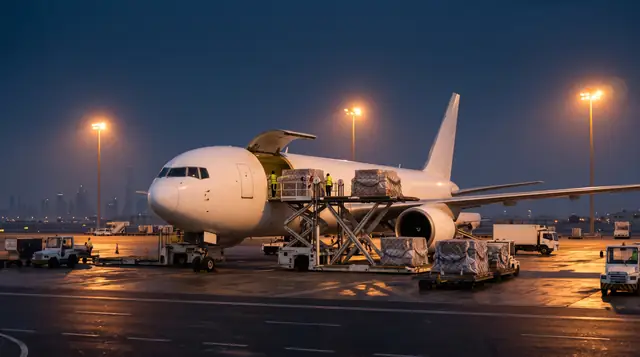
Air Freight
Import and export air cargo from Dubai, managed from pickup to final delivery with one point of contact.
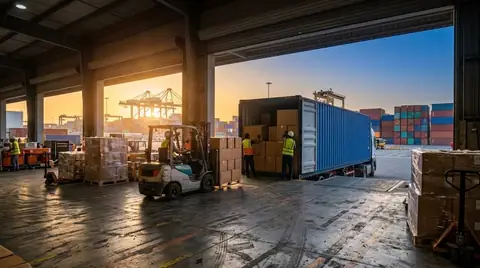
Sea Freight
Regular, secure and economical sea freight through the world's major ports, from one container to full project cargo.
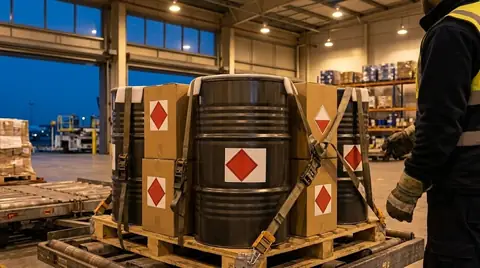
Dangerous Goods Handling
Certified handling for hazardous air cargo, in all 9 classes.
Customs Clearance is one part of what we do. Airlift Logistics is a shipping and logistics company in Dubai, with air cargo, sea freight, land transport, customs clearance and warehousing under one team.
Shipping routes from DubaiCar shipping from DubaiTrack your shipmentAbout Airlift LogisticsContact our teamShipping FAQGet a quoteBlog